All Categories
Featured

Table of Contents
- – Insights Into Selecting Virginia Solar Panel In...
- – How Funding Capabilities Determine Your Search...
- – Residential Consequences Of The 1,200 W Plug-i...
- – Navigating Homeowners Association Bylaws For V...
- – Deciding Between The Switch Together Program A...
- – How To Analyze 4.2–4.7 Peak Sun Hours Daily Fo...
Insights Into Selecting Virginia Solar Panel Installation Companies
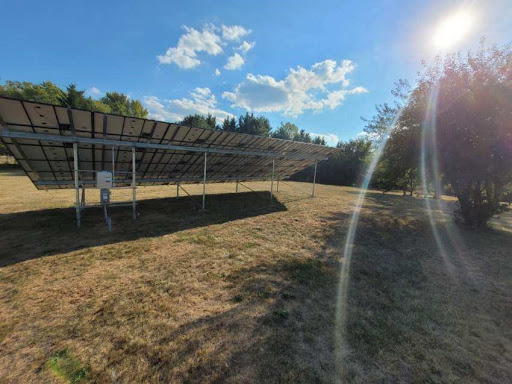
You must emphasize precision when choosing from the various Virginia Solar Panel Installation Companies to ensure your investment delivers maximum returns. With the average residential solar installation in the state requiring a 13.99 kW system, you are looking at an upfront cost between $30,075 and $40,689 before utilizing any available incentives. Because these systems currently price an average of $2.53 per watt, failing to verify your contractor against rigorous standards like NABCEP accreditation can lead to significant performance declines over the life of your equipment. By focusing on verifiable credentials and local operating history, you eliminate the risk of inferior workmanship and ensure compliance with all permitting requirements. This article provides the ultimate framework you need to recognize Top-rated solar panel installation companies serving Virginia and secure a project that meets your precise energy goals.
“Make the most of your solar installation with great incentives and expert service from the Lumina Solar team.” — Lumina Solar
How Funding Capabilities Determine Your Search For Top-rated Solar Panel Installation Firms In Virginia
Financing alternatives provided by Top-rated solar panel installation companies serving Virginia are ways that allow you to obtain a system without a large upfront capital outlay. Because the typical cost for an average 13.99 kW system varies from $30,075 to $40,689, most installers provide organized payment pathways to ensure your solar installation remains affordable. These financial products are intended to align your monthly payments with the energy reductions produced by your system.
“Beginning January 1, 2027, SB 823 and HB 1439 require solar companies to provide written contracts before a residential solar sale, lease, loan, or power purchase agreement is signed.” — convert-solar.com
You should comprehend the three primary configurations commonly offered by installers to ascertain which corresponds best with your long-term ownership goals:
| Financing Structure | Ownership Status | Maintenance Responsibility |
|---|---|---|
| Solar Loan | You own the system | Homeowner |
| Solar Lease | Installer owns the system | Installer |
| Power Purchase Agreement | Installer owns the system | Installer |
When you assess your solar proposal, note that while a $0-down loan increases your immediate equity and allows you to claim available tax incentives, a lease or power purchase agreement transfers the burden of system performance and maintenance to the contractor. Ensure that the overall interest paid over the duration of a loan does not negate the projected savings from your net metering credits or Solar Credits.
Review the particular interest rates and early repayment penalties in your contract to verify that your chosen financing structure will not limit your ability to sell your property in the future.
You need to prioritize a solar certification when choosing a professional solar company to ensure your 13.99 kW average PV installation maximizes Virginia’s 4.2 to 4.7 peak sun hours per day. To obtain the best value, you should contact Lumina Solar to compare every price quote based on an average dollars per watt of $2.53, while verifying that your chosen system qualifies for the property tax exclusion available for residential arrays up to 25 kW. You should insist on a comprehensive roof solar compatibility evaluation and determine if adding a $10,000 to $13,000 energy storage system matches your objectives for grid credit program and Solar Credits. Finally, verify that your provider understands local HOA solar rules and can manage the bulk-buy program to lower your total investment below the standard $30,075 to $40,689 range.
Residential Consequences Of The 1,200 W Plug-in Solar Cap
The 1,200 W plug-in solar cap defines the maximum capacity allowed for simplified, grid-connected solar power systems that residents can install without a traditional rooftop installation process. These systems operate by connecting directly to a standard wall outlet, providing a streamlined option for homeowners who are interested in generating renewable energy but are not ready for a full-scale PV installation. While you might concentrate on Finding a reliable solar panel installation company in Virginia for your primary roof-mounted system, these plug-in units offer a distinct, entry-level approach to energy independence.
“Starting January 1, 2027, a qualifying device is exempt from traditional interconnection and net-metering requirements and utility approval or device-related fees, subject to Chapter 1052's conditions.” — pluginsolarus.com
Safety and regulatory compliance are crucial when utilizing these systems, as they must meet specific technical requirements to function legally on the electrical grid. The following criteria regulate the deployment of these small-scale systems:
- Volume Limit: Total output is strictly limited at 1,200 watts per residence.
- Safety Standard: All units must be UL approved to ensure that they automatically disconnect from the grid during power outages.
- Connection Method: Systems must be engineered for direct attachment to a standard wall outlet.
- Regulatory Status: These systems grew lawfully permissible as of July 1, 2026.
Before purchasing hardware, verify that the specific model you select carries the necessary UL certification for automatic grid disconnection. Verify with your local power provider that your home's interior wiring can securely support the back-feeding of energy through your chosen outlet setup.

Navigating Homeowners Association Bylaws For Virginia Solar Panel Installation
HOA rules concerning solar panel installation are strictly restricted by state law, which prevents governing bodies from placing unreasonable obstacles on your project. Virginia law explicitly prohibits homeowners associations from enforcing restrictions that inflate your total installation cost by more than 5% or diminish the performance of your system by more than 10%. These legal protections ensure that your right to produce clean energy remains secured even if you live within a community governed by limiting covenants.
“Any resale certificate issued pursuant to § 55.1-2309 given to a purchaser shall contain a statement setting forth any restriction, limitation, or prohibition on the right of an owner to install or use solar energy collection devices on his property.” — communitypay.us
When you are evaluating Virginia solar panel installation companies worth hiring, prioritize those that demonstrate a distinct understanding of these statutory limitations. An seasoned provider will manage the documentation required to supersede excessive architectural mandates that clash with state-mandated performance standards.
The subsequent table outlines how these legal thresholds directly impact your project design and viability:
| Regulation Metric | Maximum Allowable Restriction |
|---|---|
| Project Cost Impact | 5% increase limit |
| System Performance Reduction | 10% output limit |
| System Capacity Coverage | Maximum 25 kW waiver |
Before concluding your contract, request that your solar firm review your specific community's foundational documents to verify that the suggested array design conforms with both state law and local aesthetic guidelines. Contact your association’s architectural review board with a copy of the state statute to proactively settle any potential conflicts before equipment delivery.
Deciding Between The Switch Together Program And A Dedicated Solar Panel Installation Firm In Virginia
The bulk-buy program is a government-backed bulk-purchasing initiative that utilizes reverse auctions to lower project costs by aggregating homeowner demand, offering a unique alternative to the conventional process of Finding a reliable solar panel installation company in Virginia. By grouping residents together, this program forces participating installers to rival on price, which often results in lower quotes than those obtained through individual outreach.
“Virginia also offers a solar property tax exemption, meaning you don't need to pay a higher property tax for adding solar panels to your house.” — energysage.com
When you assess whether to pursue this group-purchasing path or interact with individual firms, weigh the specific compromises between the two acquisition models:
| Feature | Switch Together Program | Individual Direct Quotes |
|---|---|---|
| Pricing Strategy | Competitive reverse auction | Market-based negotiation |
| Installer Choice | Limited to program partners | Open market selection |
| System Customization | Standardized packages | Highly flexible design |
| Contract Process | Pre-vetted terms | Customized service agreements |
While the program simplifies the search for reputable installers, it may limit your ability to choose specific equipment brands or specialized mounting configurations that a custom design might otherwise accommodate. If you have distinct roof geometry or particular aesthetic requirements, the standardized nature of mass-produced projects might not align with your goals for the final PV installation. You should verify the program’s list of participating installers against current online reviews and their standing with the local business bureau to ensure their individual workmanship standards satisfy your expectations.
Examine the current participating list of installers in your region to see if they provide the specific panel brands and performance ratings you need for your system size.
How To Analyze 4.2–4.7 Peak Sun Hours Daily For Solar Panel Installation
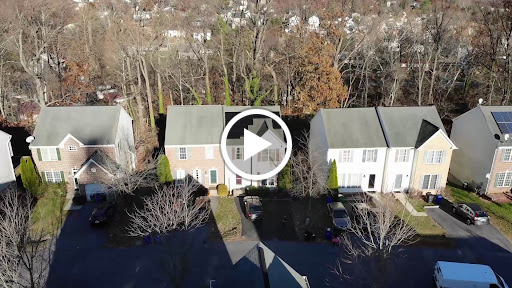
Roof aptness based on 4.2–4.7 sun hours daily is the primary metric used to ascertain if your property can support a high-yield PV installation. Installers assess your roof’s physical characteristics to ensure the system reaches its maximum production potential within these established irradiance averages.
When you assess How Virginia solar panel installation companies compare on technical site assessments, you must prioritize those that perform a detailed analysis of your specific roof geometry. Your solar firm will examine several critical factors to model expected energy output:
- Orientation: South-facing roof surfaces usually capture the most steady sunlight.
- Pitch: The slope of your roof impacts the efficiency of light absorption throughout the changing seasons.
- Structural Age: A roof nearing the end of its lifespan should be replaced before installing a system meant to last decades.
- Shading Obstructions: Nearby trees, chimneys, or adjacent structures produce shadows that significantly diminish performance.
To ascertain if your home is a viable candidate, ask that your solar company provide a production model that accounts for these specific environmental variables. You should verify your current roof age with the expected residual lifespan of the hardware before executing any installation contract.

Table of Contents
- – Insights Into Selecting Virginia Solar Panel In...
- – How Funding Capabilities Determine Your Search...
- – Residential Consequences Of The 1,200 W Plug-i...
- – Navigating Homeowners Association Bylaws For V...
- – Deciding Between The Switch Together Program A...
- – How To Analyze 4.2–4.7 Peak Sun Hours Daily Fo...
Latest Posts
Hiring Reliable Virginia Solar Panel Installation Companies For Your Roof
More
Latest Posts
Hiring Reliable Virginia Solar Panel Installation Companies For Your Roof